Problem & approach
For people trying to use their phone more intentionally, time spent in an app does not explain why it was used or whether a goal was met. Missing usage access must not prevent someone from starting a focus session.
I keep Android usage estimates, app-owned sessions and optional reflections separate. People can set an intention, pause or revise it, and finish without being forced to report a successful outcome. Manual focus works without Usage Access.
- 01
Set an intention
Choose a task and time; usage permission is optional.
- 02
Run the session
Pause, extend or revise as needed.
- 03
Close & reflect
Save the session and optionally record an outcome.
Inside the application
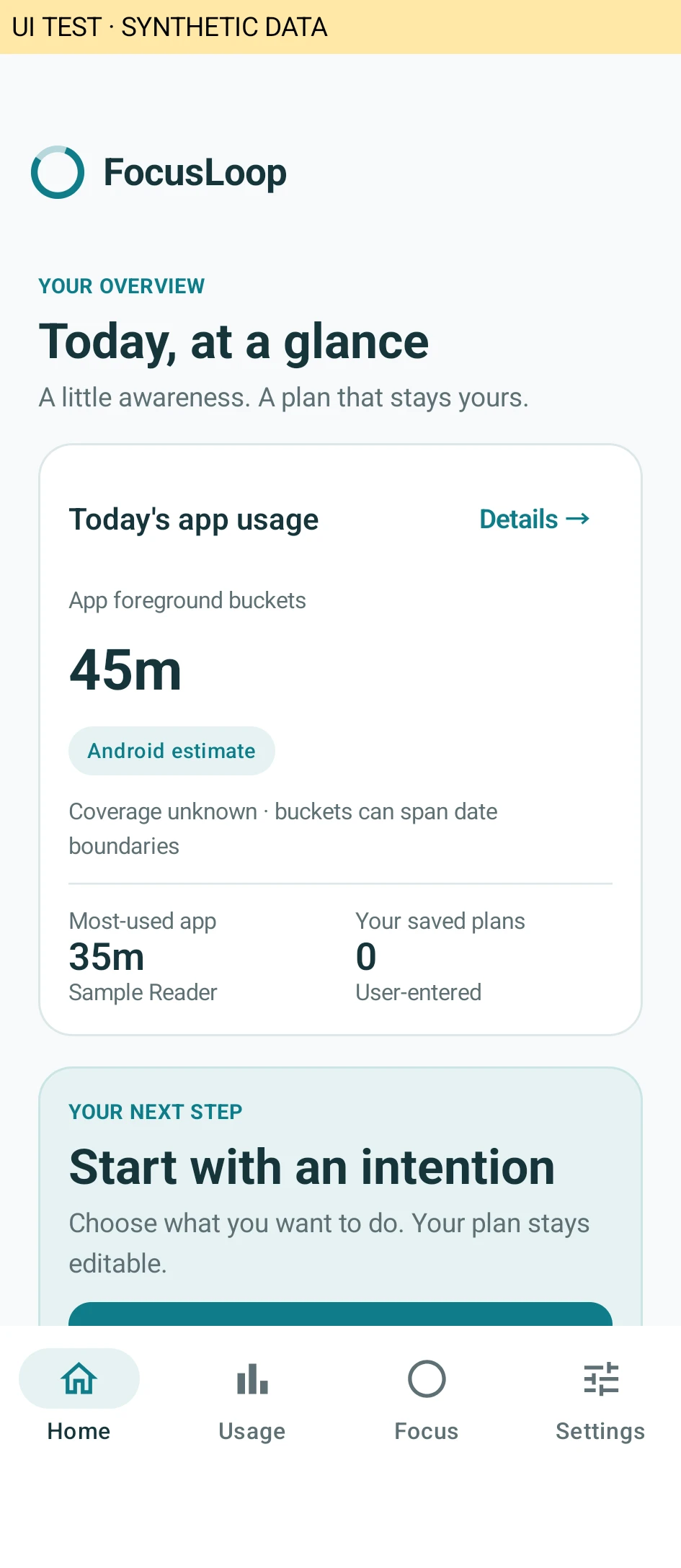
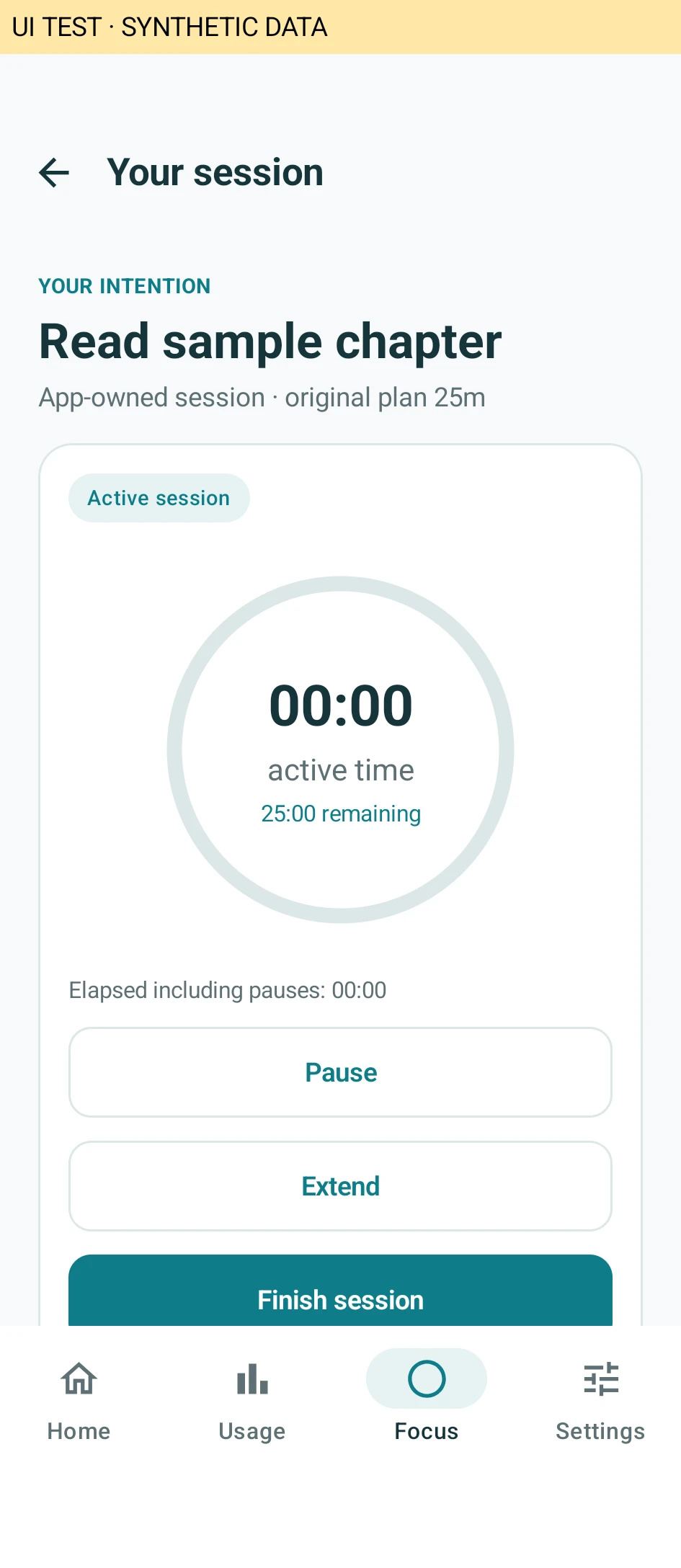
- PlanSet an intention and a duration; revise the session without erasing its original plan.
- FocusStart, pause, resume, extend and finish one active session.
- ReflectRecord an optional outcome or skip it; inspect local session history.
System architecture
Compose + ViewModel
Home, Usage, Focus and Settings collect application state.
Session rules → Room
Intentions, revisions, session events and reflections persist locally.
Android usage adapter
Optional permission; unavailable and incomplete results stay explicit.
- Kotlin
- Jetpack Compose
- Room
- Kotlin coroutines


Engineering decisions
Missing data is not zero usage
I preserve missing days and coverage warnings instead of filling charts with invented zeroes. That keeps an incomplete platform history from looking like an accurate behavior record.
Reviewed: Usage aggregation and calendar-range rules
Preserve the original intention
Revisions append to the session record instead of replacing the initial plan. Paused time and active time remain distinct so a later reflection has useful context.
Reviewed: Session rules and additive Room migration
Implementation in focus
Recovering a timer without inventing progress
- Problem
- A process restart, reboot or clock change can make a wall-clock-only timer misleading.
- Implementation
- Session rules use monotonic timing and boot context. Uncertain recovery becomes an explicit state; it does not silently declare the session complete.
Verification & status
Session, storage & device test records
Repository report · 17 November 2026 · Reviewed 18 November
The 17 November repository report records 36 JVM and 26 device instrumentation tests, covering session rules, migration, storage, usage access and synthetic Compose flows.
These records were reviewed, not rerun for this portfolio update. Semantic UI tests do not establish physical taps, TalkBack, continuous folding or real reminder delivery.
Native development build
The native development build implements the main navigation, intention/session flow, usage views, settings and local history.
Usage totals remain platform estimates. There is no claim of behavioral effectiveness or production release; manual accessibility and notification checks remain.
Lessons & next steps
Data provenance belongs in the interface. A recorded intention, a platform estimate and a personal reflection answer different questions and should not be presented as interchangeable evidence.
Complete manual accessibility, fold/resize and reminder-delivery checks before release preparation.
Source & evidence access
The repository remains private. This case study shares reviewed implementation summaries and safe application captures, not source code or operational records.
Private source snapshot ac54d8d, inspected 18 November 2026. Public content contains only reviewed summaries and synthetic application captures.